

Healthcare and Medical Services
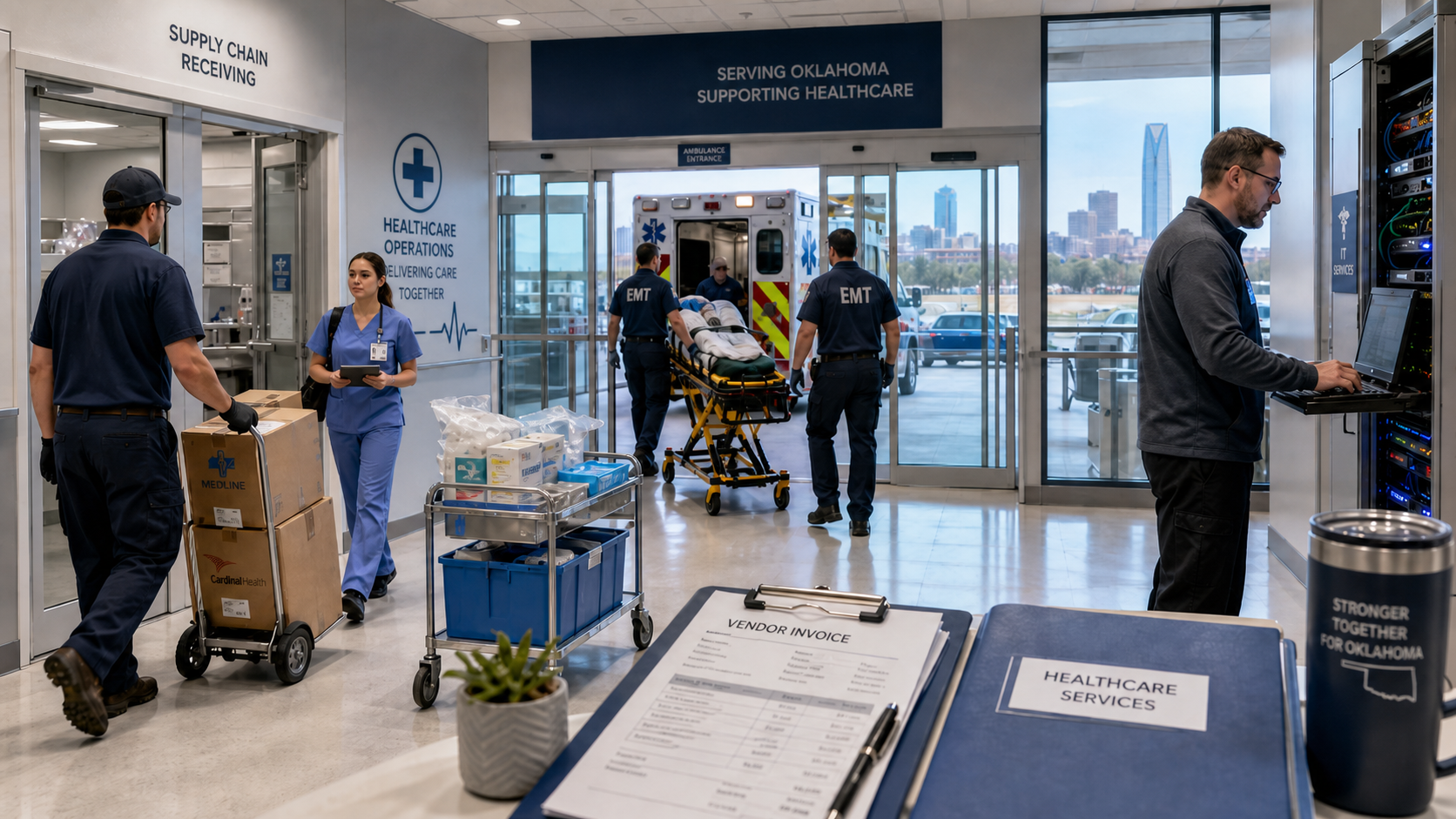
The healthcare industry presents a distinct set of cash flow challenges driven by complex reimbursement cycles, multiple payer sources, and administrative processes that can delay payment for weeks or months. Whether you operate a medical staffing agency, a home health services company, a durable medical equipment supplier, an ambulance or medical transport service, or an ancillary healthcare services firm, the gap between delivering care and receiving payment is a constant operational pressure.
Unlike most B2B industries where you invoice a single customer and wait for one payment, healthcare businesses often deal with a layered payment environment — hospitals, clinics, insurance carriers, Medicare, Medicaid, and third-party administrators all have their own timelines, documentation requirements, and approval processes. The result is a receivables portfolio that can be unpredictable in both timing and amount.
Which Healthcare Receivables Are Eligible for Factoring?
It's important to understand that not all healthcare receivables are factorable. Insurance claims, Medicare and Medicaid reimbursements, and patient-pay balances are generally not eligible for traditional accounts receivable factoring. These receivables involve third-party adjudication, potential claim denials, adjustments, and regulatory restrictions that place them outside the scope of standard factoring arrangements.
What is factorable — and where Hexagon focuses — are business-to-business healthcare receivables. These are invoices generated by healthcare service companies billing other businesses or institutions directly for services rendered. Common examples include:
Medical staffing agencies that place nurses, technicians, therapists, or administrative personnel at hospitals, clinics, and long-term care facilities. Home health companies that contract with healthcare systems or managed care organizations. Medical equipment and supply companies invoicing hospitals, clinics, or government healthcare facilities. Medical transport and ambulance services billing healthcare institutions or government agencies for patient transport. Healthcare consulting, IT, and administrative services firms invoicing healthcare organizations for professional services.
In each of these cases, the receivable is a straightforward B2B invoice — services were rendered, an invoice was generated, and payment is expected from a creditworthy healthcare institution or organization. These receivables follow the same factoring process as any other industry.
How Factoring Works for Healthcare Service Companies
After you provide services and invoice your client — whether that's a hospital system, a clinic network, a government healthcare agency, or a managed care organization — you submit that invoice to Hexagon along with supporting documentation such as a signed service agreement, timesheets, proof of service delivery, or a purchase order.
We verify the receivable with your client, then advance 80–90% of the invoice value directly to your account, typically within 24 to 48 hours. When your client pays the invoice in full, we remit the remaining balance to you minus a small factoring fee.
For healthcare staffing agencies and other service providers with recurring weekly or biweekly billing cycles, factoring becomes a consistent and predictable funding mechanism that aligns with your payroll obligations and operational cadence.
The Staffing Challenge in Healthcare
Healthcare staffing agencies face many of the same cash flow pressures as staffing companies in other industries — but with added complexity. The demand for qualified healthcare professionals is high, the competition for talent is intense, and the cost of labor is significant. Nurses, therapists, and specialized technicians command competitive wages, and payroll is non-negotiable.
At the same time, the healthcare facilities you staff often pay on 30- to 60-day terms or longer. Every new contract and every new placement widens the gap between what you're paying your employees and what you've collected from your clients. Growth, which should be your goal, can become a cash flow crisis without adequate working capital.
Factoring closes that gap. As you invoice for hours worked, you submit those invoices to Hexagon and receive advances within 24 to 48 hours. Your funding scales with your placements — the more you staff, the more invoices you generate, and the more working capital you access. There is no need to renegotiate a credit line or wait for a bank to approve an increase. The facility grows with your business automatically.
Why Oklahoma Healthcare Service Companies Work With Hexagon
Oklahoma's healthcare landscape includes major hospital systems, regional medical centers, Veterans Affairs facilities, tribal health organizations, long-term care networks, and a growing ecosystem of outpatient and specialty care providers. The businesses that support these institutions — staffing agencies, equipment suppliers, transport services, and professional services firms — are essential to the healthcare delivery system, and they deserve a financial partner who understands both their industry and their market.
Hexagon brings over 30 years of financial experience and a local presence that allows us to build genuine relationships with our healthcare clients. We understand the documentation standards, the billing cycles, and the payer dynamics that are unique to healthcare. And because we're based in Oklahoma, we're familiar with the institutions you're serving and the market conditions you're operating in.
Whether you're a growing medical staffing agency, an established home health provider, or a medical equipment supplier serving healthcare facilities across the state, Hexagon provides working capital, receivables management support, and the personal attention your business needs to thrive.